
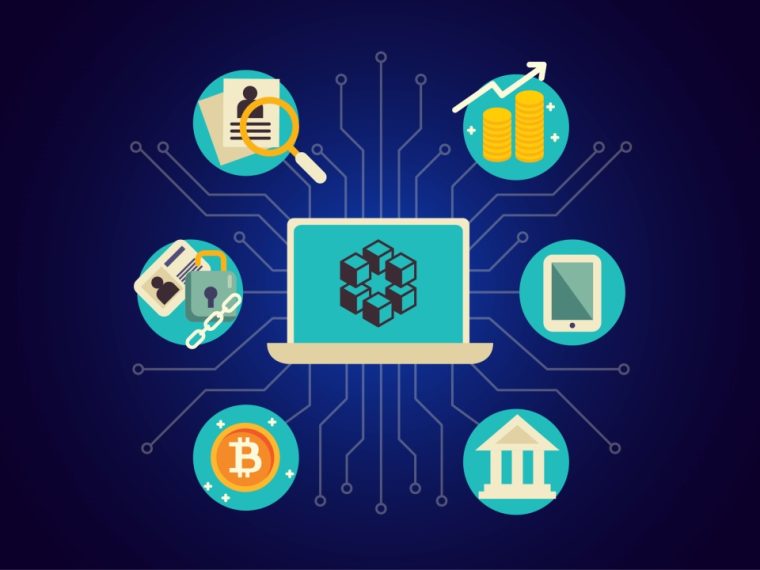
Introduction: The Dawn of a Trustless Paradigm
When blockchain first emerged alongside Bitcoin in 2009, it seemed like an obscure experiment—a digital ledger to support an unregulated currency that only fringe technologists and libertarians dared to trust. Fast forward to today, and blockchain technology stands at the core of countless revolutions: redefining how we record transactions, prove ownership, secure data, and foster trust in a world increasingly skeptical of centralized authority. This silent yet profound innovation deserves more than casual mention; it warrants a closer look at what it truly is, how it works, and why its implications ripple far beyond cryptocurrencies.
What is Blockchain? More Than a Digital Ledger
At its essence, a blockchain is a decentralized, distributed database that records transactions in blocks. These blocks are chained together chronologically, creating an immutable record of every interaction or exchange. Unlike traditional databases, where a central administrator can alter or delete entries, a blockchain is maintained by a network of participants—often called nodes—who verify and agree upon each addition.
This architecture eliminates the need for a trusted intermediary. It’s the digital embodiment of “trust but verify”—except here, trust is replaced by mathematical certainty and cryptographic proofs. Once information is inscribed onto the blockchain, altering it requires consensus from the majority of the network, rendering fraud practically impossible.
The Core Pillars: How Blockchain Works
To appreciate blockchain’s transformative potential, one must understand the key mechanisms that make it work:
-
Decentralization
No single entity controls the data. Power is distributed among network participants, who collectively validate and store the same copy of the ledger. -
Immutability
Once a block is added, it is nearly impossible to alter without re-mining every subsequent block—a task so computationally infeasible that the record effectively becomes tamper-proof. -
Consensus Mechanisms
To validate transactions and add blocks, networks rely on consensus algorithms such as Proof of Work (PoW) or Proof of Stake (PoS). These mechanisms ensure that all participants agree on the state of the ledger. -
Transparency and Pseudonymity
All transactions are visible to anyone with access to the network, ensuring transparency. Yet, the identities behind those transactions remain pseudonymous, protected by cryptographic addresses.
Beyond Bitcoin: Real-World Applications
While Bitcoin popularized blockchain, its potential applications extend well beyond cryptocurrency. Consider a few sectors already experimenting with blockchain’s promise:
-
Supply Chain Management
Blockchain offers end-to-end visibility and traceability. Companies can track goods from origin to shelf, ensuring authenticity and reducing fraud. For instance, Walmart uses blockchain to trace the journey of produce, significantly cutting down the time it takes to pinpoint contamination sources. -
Healthcare
Patient records stored on a blockchain remain secure yet accessible to authorized parties. This fosters seamless information sharing among providers without sacrificing privacy. -
Voting Systems
Blockchain-based voting could enable secure, transparent elections resistant to fraud and tampering—though scalability and voter anonymity remain challenges to be solved. -
Intellectual Property and Digital Art
Non-Fungible Tokens (NFTs) have turned blockchain into a medium for certifying the authenticity and ownership of digital assets—ushering artists, musicians, and creators into a new era of monetization.
Challenges and Criticisms: The Other Side of the Coin
No exploration of blockchain would be complete without acknowledging its criticisms and limitations. For all its promise, the technology faces significant hurdles:
-
Energy Consumption
Networks like Bitcoin’s Proof of Work consume massive amounts of electricity, raising sustainability concerns. Alternative consensus mechanisms like Proof of Stake aim to mitigate this impact. -
Scalability
Processing transactions on a global scale is slow and expensive compared to centralized systems like Visa or Mastercard. Developers are racing to build “Layer 2” solutions that process transactions off-chain and settle them periodically on the main blockchain. -
Regulatory Uncertainty
Governments struggle to define clear regulations for blockchain applications. This lack of clarity can stifle innovation or lead to misuse. -
Complexity and Accessibility
For everyday users, blockchain can seem dauntingly technical. Until the user experience becomes more intuitive, mainstream adoption will likely remain sluggish.
The Road Ahead: A Future Written in Blocks
Blockchain’s current state resembles the internet of the 1990s—awkward, experimental, and not fully understood by the masses. Yet, the foundations it is laying are undeniable. Corporations, governments, and grassroots communities alike are waking up to its potential to rewrite the rules of trust and record-keeping.
In the next decade, expect to see:
-
Broader adoption of Central Bank Digital Currencies (CBDCs) built on blockchain frameworks
-
Interoperable blockchains allowing different networks to communicate seamlessly
-
Mainstream applications in identity verification, land registries, and copyright protection
-
Sustainable consensus models that minimize environmental impact without compromising security
Conclusion: The Silent Revolution Continues
Blockchain is not a panacea, nor is it a passing fad. It is a foundational technology—an architecture of trust that transfers the burden of honesty from human institutions to incorruptible code. Like all transformative tools, its impact depends on how wisely we wield it.
As more industries and innovators embrace this silent engine, one thing becomes clear: the future of transactions, governance, and even the fabric of our digital lives may well be written, block by block, into an immutable chain for generations to come.