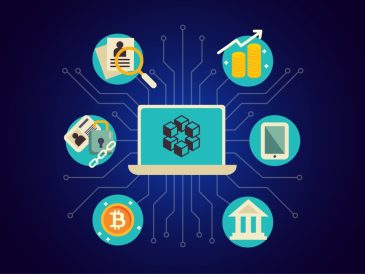

The birth of Bitcoin in 2009 introduced the world to the concept of a decentralized ledger. It proved that digital currency could be exchanged securely without a centralized intermediary like a bank. However, the true transformation of blockchain technology began a few years later when the focus shifted from simple peer-to-peer payments to programmable transactions. This evolution was driven by the introduction of smart contracts.
Today, smart contracts serve as the fundamental architecture for the vast majority of blockchain innovations. By transforming passive data storage into an active, automated computational environment, these self-executing agreements have redefined trust, security, and efficiency across global industries.
Understanding the Mechanics of Smart Contracts
At its core, a smart contract is a self-executing digital protocol programmed to automatically execute, control, or document relevant events and actions according to the terms of a contract or an agreement. The code and the agreements contained therein exist across a distributed, decentralized blockchain network.
The underlying logic of a smart contract follows a basic conditional framework: If/When X event occurs, then execute Y action. Because these contracts run on a blockchain, they inherit the core properties of the underlying network:
-
Immutability: Once a smart contract is deployed to the blockchain, its code cannot be altered. No party can change the rules of the game after the contract is live.
-
Distributed Consensus: The outcome of the contract is validated by every node in the peer-to-peer network, eliminating the risk of a single point of failure or malicious tampering.
-
Transparency: The source code of a public smart contract is visible to anyone on the network, ensuring complete auditability of the logic governing the transaction.
Eliminating the Middleman and Reducing Counterparty Risk
In traditional commerce, trust is expensive. When two unfamiliar parties wish to conduct business, they rely on centralized intermediaries to guarantee the transaction. Banks, escrow agents, lawyers, and brokers act as the glue holding agreements together. These intermediaries introduce significant friction, charging substantial fees and adding days or weeks of processing delays.
Smart contracts eliminate the need for these traditional gatekeepers by replacing institutional trust with cryptographic proof.
Consider a standard real estate transaction. Typically, a buyer and seller must use an escrow company to hold funds until all closing conditions are met. With a smart contract, the process is streamlined. The buyer deposits digital assets into the contract, and the seller uploads the digital property deed. Once the system verifies that both conditions are satisfied, the contract simultaneously transfers the funds to the seller and the deed to the buyer. If either party fails to meet the obligations, the assets are automatically returned to their original owners.
By removing intermediaries, organizations achieve two critical outcomes:
-
Cost Reduction: Eliminating third-party service fees dramatically lowers transaction costs.
-
Speed: Transactions that previously required manual verification and bureaucratic approvals are completed in seconds or minutes.
Catalyzing the Decentralized Finance Revolution
The most profound demonstration of smart contracts as an innovation backbone is the rise of Decentralized Finance, commonly known as DeFi. DeFi represents an entirely new financial ecosystem built on public blockchains that mirrors traditional financial services but operates without centralized institutions.
Smart contracts act as the foundational building blocks for every major DeFi application:
-
Decentralized Exchanges: Platforms allow users to trade digital assets directly from their wallets without relying on a centralized exchange to hold their funds. The trading pricing and liquidity matching are entirely managed by smart contract algorithms.
-
Automated Lending and Borrowing: Smart contracts enable peer-to-peer lending markets. Borrowers lock up digital collateral into a contract, which automatically dispenses a loan. If the value of the collateral drops below a specific threshold, the contract automatically liquidates the position to repay the lender, protecting the system from defaults without requiring credit checks.
-
Yield Aggregation: Programmed strategies automatically shift capital across various DeFi protocols to maximize interest generation for investors, optimizing returns with deterministic precision.
DeFi highlights how smart contracts can turn complex financial services into open-source, lego-like components that can be stacked, modified, and combined to create completely new financial instruments.
Redefining Asset Ownership and Digital Identity
Beyond finance, smart contracts are transforming how society defines, tracks, and transfers ownership. This is most visible through the proliferation of Non-Fungible Tokens and tokenized real-world assets.
While many associate tokens purely with digital art, the underlying smart contracts provide the actual utility. A smart contract governing a token can enforce permanent creator royalties. Every time the digital asset is resold on a secondary market, the contract automatically calculates a percentage of the sale price and routes it directly to the original creator’s wallet. This structural shift empowers creators by bypassing traditional distribution monopolies.
Furthermore, enterprises are increasingly using smart contracts to tokenize real-world assets such as fractional real estate, commodities, and corporate bonds. By dividing a physical asset into digital shares governed by a smart contract, businesses can inject unprecedented liquidity into historically illiquid markets. The contract handles compliance, dividend distribution, and ownership transfers automatically, opening up investment opportunities to a broader demographic.
Supply Chain Optimization and Traceability
Global supply chains are notoriously complex, involving dozens of independent entities, disparate software systems, and mountains of paperwork. This lack of transparency often leads to counterfeiting, delays, and costly disputes.
Smart contracts introduce a single, immutable source of truth for supply chain logistics. When integrated with Internet of Things sensors and tracking devices, smart contracts can automate entire logistical workflows:
-
Automated Payments upon Delivery: When a shipment of temperature-sensitive pharmaceuticals arrives at a distribution center, an IoT sensor scans the barcode and verifies that the cargo remained within safe temperature limits during transit. This data triggers a smart contract that immediately releases payment to the shipping carrier.
-
Provenance Verification: Consumers can trace the exact journey of a product from raw material to retail shelf. The smart contract logs every handoff, ensuring that claims regarding organic materials, fair trade practices, or ethically sourced gems are verifiably true.
The Paradigm of Decentralized Autonomous Organizations
The ultimate expression of smart contracts as organizational infrastructure is the Decentralized Autonomous Organization. A DAO is an entity governed entirely by computer code rather than a centralized executive board or management hierarchy.
The bylaws, voting mechanisms, and treasury management of a DAO are written directly into its smart contracts. Members participate in governance by holding native governance tokens, which give them the right to vote on proposals.
When a member submits a proposal to spend funds from the DAO treasury on a new project, other members cast their votes on the blockchain. If the proposal passes the predetermined threshold within the smart contract logic, the contract automatically executes the code to release the funds to the project team. There is no executive director who can veto the decision, and no treasurer who can misappropriate the funds. This framework allows global communities to collaborate, pool capital, and manage resources safely without ever meeting in person.
Navigating the Challenges and Future Outlook
While smart contracts offer unparalleled innovation, they are not without substantial challenges. Because these programs are immutable once deployed, any bugs or vulnerabilities in the code are permanently etched onto the blockchain. Malicious actors frequently scan public smart contracts for exploits, leading to high-profile hacks within the DeFi space. The maxim “code is law” means that if a vulnerability exists in the contract logic, the network will execute it faithfully, regardless of the programmer’s original intent.
To mitigate these risks, the blockchain industry has adopted rigorous security protocols, including multi-signature wallets, extensive third-party code audits, and formal verification methods that mathematically prove the correctness of a contract’s logic before deployment.
As blockchain networks continue to scale, reduce transaction costs, and improve interoperability, the adoption of smart contracts will expand from native Web3 projects into mainstream corporate environments. They are transforming from an experimental technology into the foundational framework for the next generation of global commerce, governance, and digital interaction.
Frequently Asked Questions
What happens if there is a mistake or a bug found in a deployed smart contract?
Once a smart contract is deployed to a public blockchain, its code is immutable and cannot be edited to fix a bug. To rectify a flaw, developers typically must deploy a completely new version of the contract to a new blockchain address. They must then convince users to migrate their assets and data to the updated contract. Some advanced architectures utilize proxy contracts, which act as a router directing users to a logic contract, allowing developers to swap out the underlying logic contract while keeping the entry address the same.
Can smart contracts access real-world data outside of the blockchain network?
Blockchains are isolated, deterministic environments, meaning smart contracts cannot natively fetch data from the external world, such as stock prices, weather reports, or flight statuses. To solve this problem, smart contracts rely on decentralized networks known as oracles. Oracles act as bridges that securely retrieve, verify, and feed external data points into the blockchain, allowing smart contracts to execute based on real-world events.
Do you need to know how to code to interact with or use a smart contract?
No, everyday users do not need programming knowledge to utilize smart contracts. Web3 developers build user-friendly graphical interfaces, known as Decentralized Applications, which look and feel like standard websites or mobile applications. When a user clicks a button to swap a token, purchase an asset, or vote on a proposal, the front-end application automatically translates that action into a transaction call that interacts with the underlying smart contract behind the scenes.
How are legal disputes handled if a smart contract executes an outcome that one party disagrees with?
From a technical standpoint, the blockchain enforces the execution of the contract regardless of dispute because code is deterministic. However, from a legal perspective, jurisdictions worldwide are still evolving their frameworks. In many cases, if a smart contract results in an unfair outcome due to fraud or exploitation, traditional courts can still hold the individuals behind the transaction legally liable and compel them to return assets or pay damages using fiat currency.
What is the difference between a standard crypto transaction and a smart contract transaction?
A standard cryptocurrency transaction is a straightforward transfer of value from one wallet address to another, such as sending Bitcoin from one person to another. A smart contract transaction involves sending data or assets to a programmable contract address. This action triggers the execution of specific code within the contract, which may involve complex internal computations, interacting with other contracts, or moving assets among multiple parties based on conditional logic.
Are smart contracts legally binding in the eyes of governments?
The legal status of smart contracts varies significantly by jurisdiction. Some states and countries have passed specific legislation explicitly recognizing smart contracts as legally binding agreements, provided they meet the basic requirements of a traditional contract, which are offer, acceptance, and consideration. In other regions, they are viewed merely as technological tools used to execute parts of a broader, traditional written legal contract rather than being considered independent legal agreements themselves.